Paint Protection Film VS Ceramic Coating: Which Is Better for Raleigh Drivers?
If you’re a driver in Raleigh, Apex, Cary, or anywhere in the Triangle, your vehicle faces a combination of road debris, highway miles, intense summer sun, rain, pollen, and everyday wear. If you want to keep your paint looking its best, two of the most popular protection options are paint protection film (PPF) and ceramic coating.
When It Comes To PPF vs. Ceramic Coating, Which One Is Better?
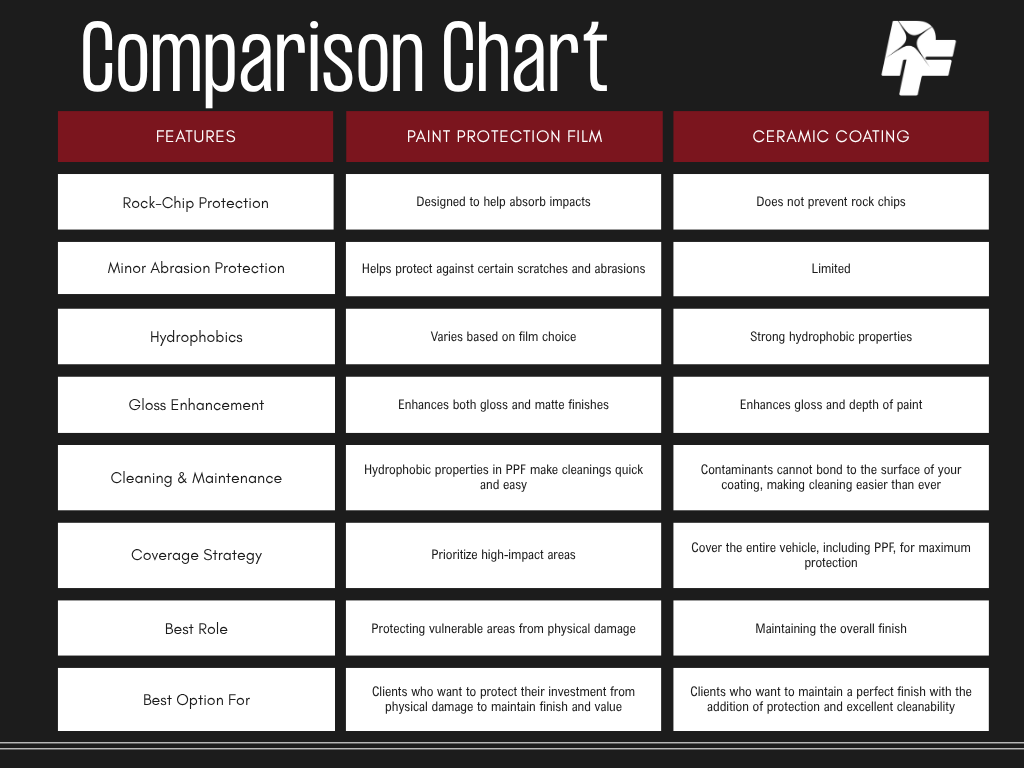
The truth is, they serve different purposes. PPF is designed to help protect your paint from physical damage, while ceramic coating enhances your paint’s surface with a durable, hydrophobic layer that makes cleaning and maintenance easier. For drivers who want comprehensive vehicle protection, you don't necessarily have to choose one over the other. Combining front-end PPF with a full-vehicle ceramic coating offers a practical balance of physical paint protection, easier maintenance, and long-term appearance. At Perfect Finish, we help drivers throughout Raleigh and Wake County choose protection based on how they drive, where they park, and how they want their vehicles to look for years to come.
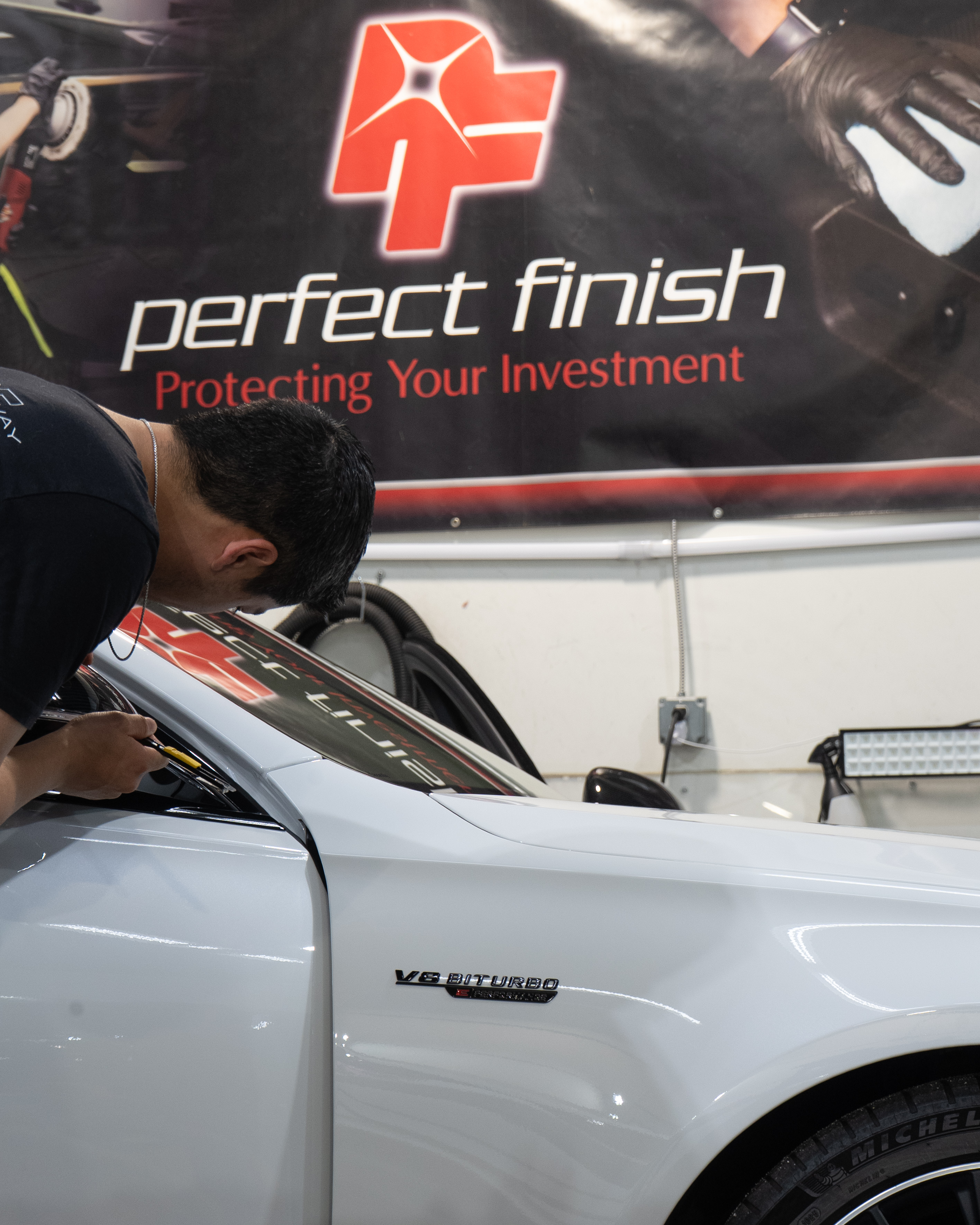
What Is Paint Protection Film (PPF)?
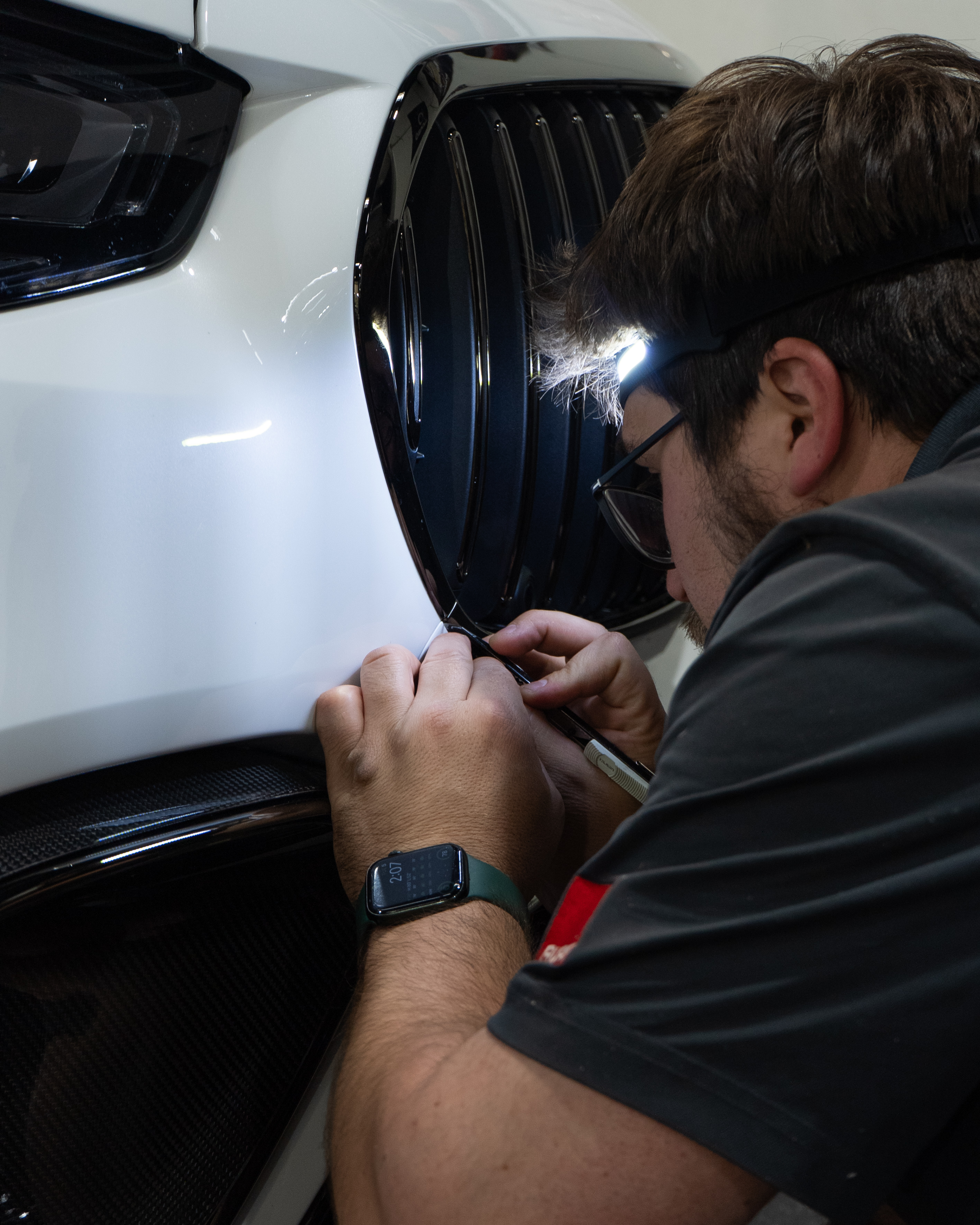
Paint protection film is a transparent, durable urethane film applied to painted surfaces. It creates a physical barrier between your vehicle’s paint and the hazards it encounters on the road. Think of PPF as a protective shield for your paint.
Quality PPF can help protect against:
- Rock chips and small road debris
- Bug splatter and road grime
- Minor scratches and surface abrasions
- Light impacts and everyday wear
- Certain environmental contaminants
Many premium films also feature self-healing properties that allow some light surface marks to diminish with heat. For Raleigh drivers, PPF is particularly valuable on the front of the vehicle, where paint is most exposed to debris kicked up by other cars and trucks.
Why Prioritize Front-End PPF?
Your front bumper, hood, front fenders, mirror caps, and headlights are among the areas most exposed to road debris. Highway driving on I-40, I-440, US-1, and other busy Triangle routes can expose these surfaces to rocks and other airborne particles. Even careful driving cannot eliminate the risk of rock chips. A full front PPF package focuses protection on these high-impact areas. Depending on the package, coverage may include the front bumper, full hood, full front fenders, a-pillars and mirror caps. Headlight protection may also be available. Full-vehicle PPF is an option for drivers who want physical protection across nearly every painted panel. However, for many daily drivers, prioritizing the front end is a practical starting point.
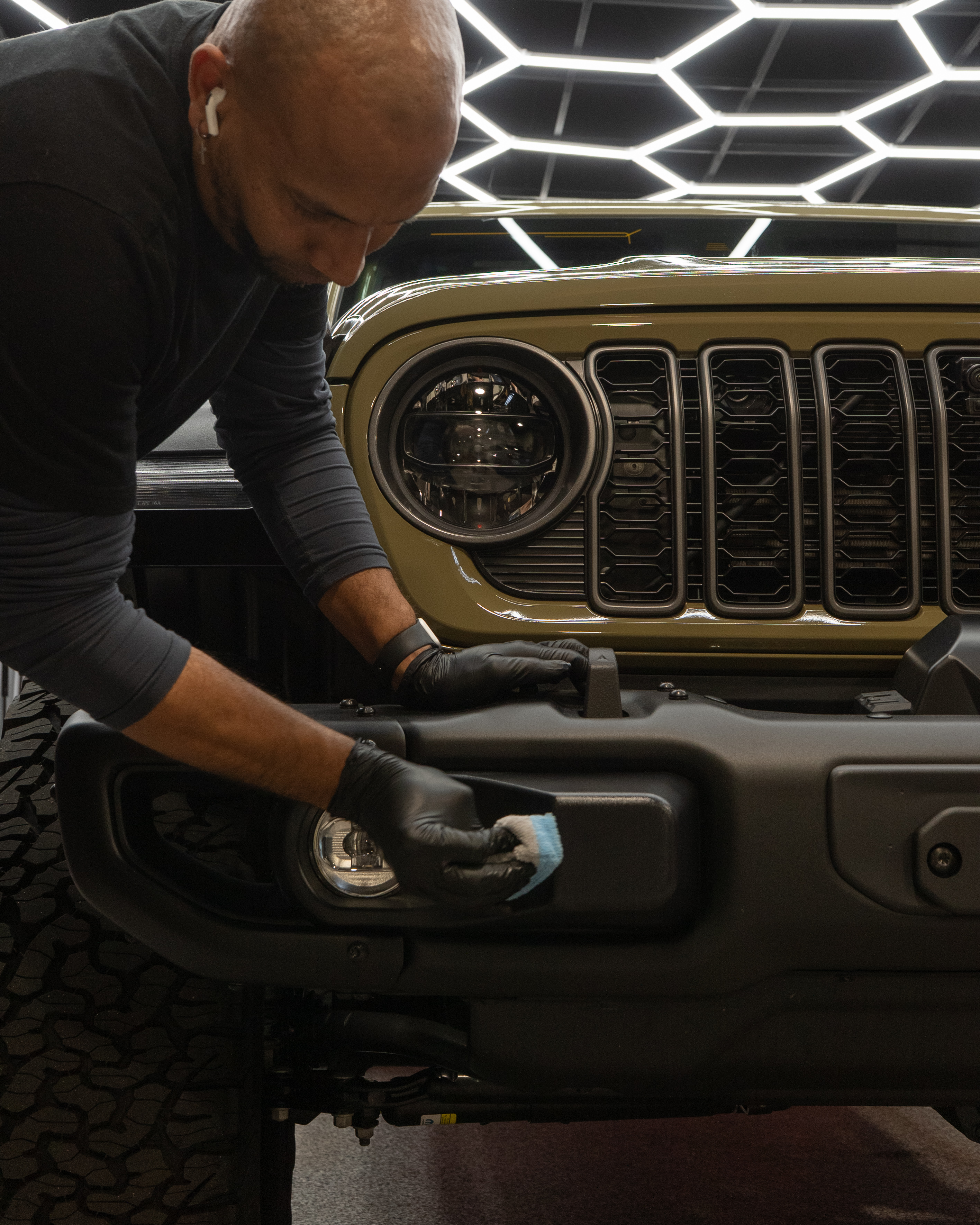
What Is Ceramic Coating?
Ceramic coating is a liquid-applied protective product that bonds to the vehicle’s exterior surface, creating a durable layer over the paint. Unlike PPF, ceramic coating is not a thick physical film designed to absorb rock impacts. Its primary benefits are surface protection, gloss, and easier maintenance.
A professional ceramic coating can provide:
- Hydrophobic properties: Water beads and sheds more readily from the surface.
- Easier cleaning: Dirt and road grime are generally easier to remove.
- UV-related protection: Helps protect the finish from certain effects of sun exposure.
- Enhanced gloss: Adds depth and clarity to the paint’s appearance.
- Resistance to certain contaminants: Helps make it easier to clean away substances such as bird droppings, bug residue, and tree sap before they cause damage.
Ceramic coatings do not make paint scratch-proof or eliminate the risk of rock chips. Their real value is helping preserve the appearance of your vehicle while making regular maintenance less demanding. Ceramic coatings help preserve the depth and quality of your paint so it looks showroom ready for years with the correct care.
Why Coat the Entire Vehicle?
While PPF is often prioritized on the front end, ceramic coating can be applied to compatible exterior painted surfaces across the entire vehicle. That means your doors, rear quarter panels, roof, trunk, and other painted areas can benefit from easier cleaning, improved water behavior, UV rejection and enhanced gloss—not just the front bumper and hood. This is especially useful for drivers dealing with North Carolina's seasonal pollen, frequent rain, summer heat, and the general buildup that comes with daily driving. A full-vehicle ceramic coating also creates a more consistent finish across the vehicle, helping all of your painted panels maintain a clean, polished appearance.
Why Raleigh Drivers Should Consider Both
For drivers who want to protect their investment, combining the two technologies offers complementary benefits.
1. Protect the Front End From Road Damage
Start with PPF on the areas most likely to take a hit. Protecting the front bumper, hood, fenders, and mirror caps helps reduce the likelihood of paint damage from everyday driving. Preventing damage is especially valuable on newer vehicles, luxury vehicles, and cars with paint colors or finishes that may be expensive or difficult to match during repairs.
2. Add Ceramic Coating to the Entire Vehicle
Once your PPF is installed, a compatible ceramic coating can be applied to the remaining painted surfaces and, where approved, over the film itself. This helps create a consistent maintenance routine for the whole vehicle. Pollen, dirt, road grime, and other common contaminants can be easier to remove, while the coating enhances the vehicle's overall appearance. The result is targeted physical protection where you need it most, paired with surface protection and easier upkeep across the rest of the vehicle.
3. Protect Your Investment Without Overcomplicating It
Not every vehicle needs full-body PPF. For many owners, a front-end PPF package combined with full-vehicle ceramic coating is a sensible way to address the most vulnerable paint while still caring for the entire exterior. Of course, the right combination depends on your driving habits, vehicle, budget, and expectations. If you frequently drive on highways, follow construction vehicles, or own a vehicle you plan to keep for many years, additional PPF coverage may be worth considering.
What About North Carolina's Sun, Pollen, and Rain?
The Triangle's climate creates several challenges for vehicle owners.
Summer heat and UV exposure: Prolonged sun exposure can contribute to paint and finish deterioration over time. Ceramic coating adds a protective surface layer, but it does not eliminate all UV-related damage.
Spring pollen & Sap: Pollen and sap can accumulate quickly and mix with moisture and other contaminants. A hydrophobic coating can make routine washing easier, but pollen should still be removed regularly.
Rain and water spots: Hydrophobic coatings encourage water to bead and shed. However, water droplets can still leave mineral deposits, especially when water dries on the surface in direct sunlight.
Highway debris: This is where PPF is particularly important. Neither ceramic coating nor careful washing can prevent a rock from chipping exposed paint.
Understanding these different risks is why we recommend choosing protection based on the job each product is designed to do.
Can You Apply Ceramic Coating Over PPF?
Yes. Many PPF manufacturers offer films that are compatible with ceramic coatings, and applying a compatible coating over PPF can improve water repellency and make the film easier to maintain. The important detail is product compatibility. The coating should be approved for the specific film being installed, and the installer should follow the manufacturer's preparation and application requirements. At Perfect Finish, we consider how the film and coating will work together so your protection package is designed as a complete system rather than a collection of unrelated products.

What Is the Best Protection Package for Your Vehicle?
For many Raleigh-area drivers, we recommend considering the following options:
Option 1: Front-End PPF + Full-Vehicle Ceramic Coating - A practical combination for daily drivers who want to protect the front of the vehicle from road debris while making the entire exterior easier to clean and maintain.
Option 2: Full-Body PPF + Full-Vehicle Ceramic Coating - An option for owners who want broader physical paint protection across the vehicle, along with the maintenance benefits of ceramic coating. This may be particularly appealing for high-value vehicles, enthusiast cars, and owners who want to preserve their original finish.
Option 3: Full-Vehicle Ceramic Coating - A useful choice for drivers who primarily want enhanced gloss, hydrophobic performance, and easier maintenance. Just remember that ceramic coating alone does not provide meaningful rock-chip protection.
The best package depends on your priorities—not simply how much product you can put on a vehicle.
Why Choose Perfect Finish for PPF and Ceramic Coating in Raleigh?
At Perfect Finish, we believe protecting your vehicle should be based on the right products, proper installation, and realistic expectations. Our team helps drivers throughout Apex, Raleigh, Cary, Holly Springs, Wake Forest, and the surrounding Triangle choose paint protection solutions suited to their vehicles and driving habits. We focus on quality films and coatings, careful preparation, professional installation, and attention to detail. Our goal is to help you preserve your vehicle's finish and make ongoing maintenance easier. We also understand that the installation is only part of the ownership experience. Proper aftercare and maintenance play an important role in helping your protection perform as intended. That is why Perfect Finish is here for you for the life of the vehicle. With subscription packages and savings on maintenance details, we have your back for the life of the vehicle.
The Bottom Line: PPF and Ceramic Coating Work Better Together
So, is PPF or ceramic coating better for Raleigh drivers? They are designed to do different jobs, which is why combining them can make so much sense. Prioritize PPF on the front of your vehicle to help defend against rock chips and physical damage. Then add ceramic coating across the entire vehicle to enhance gloss, improve water repellency, and simplify maintenance. You get targeted protection where road debris is most likely to strike and surface protection throughout the rest of the vehicle. At Perfect Finish, we help you find the right balance between coverage, performance, and long-term value.
Ready to Protect Your Vehicle?
If you're considering PPF, ceramic coating, or a combination of both, contact Perfect Finish to discuss the right package for your vehicle.

.jpg)